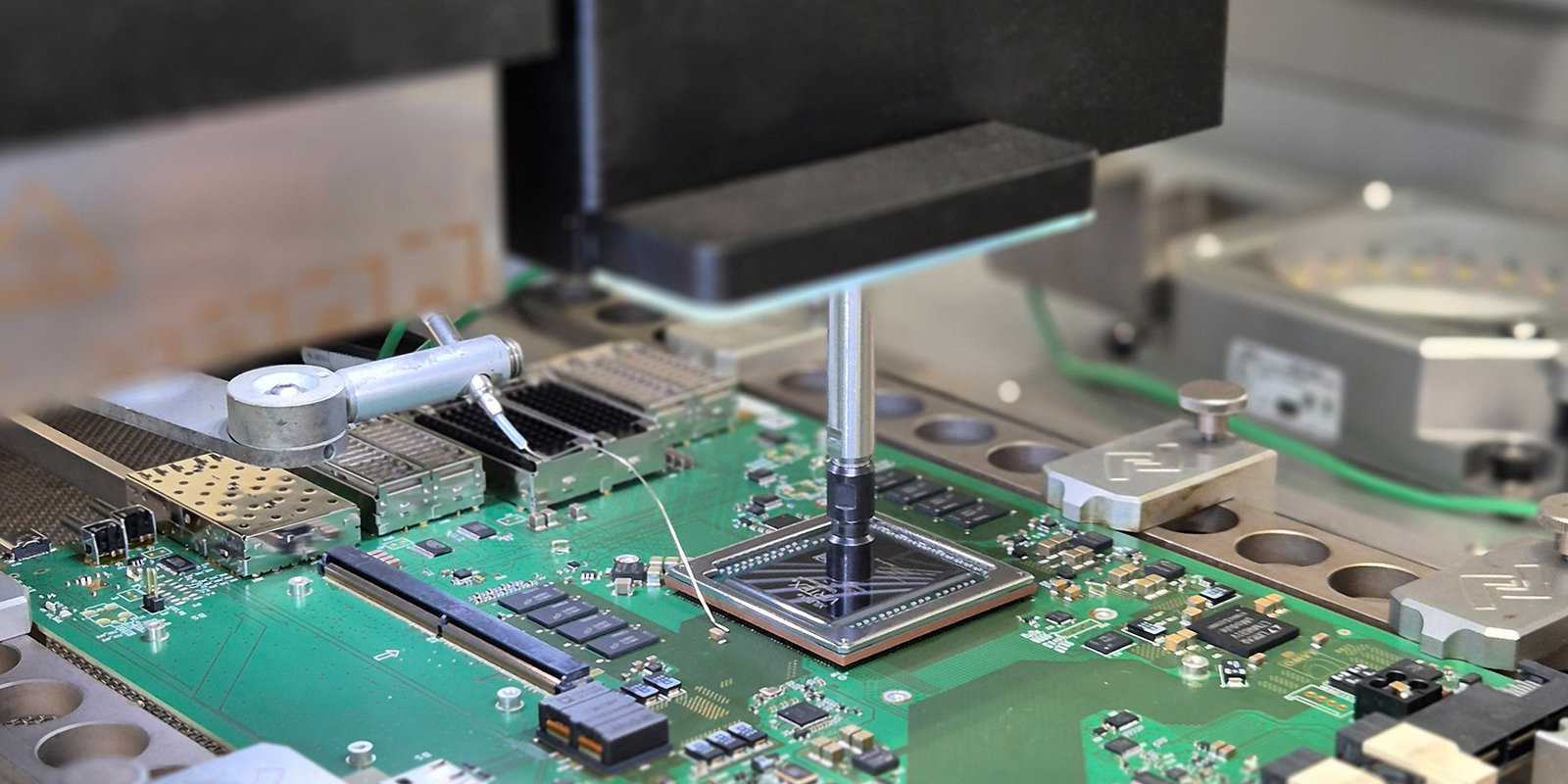
When broadcasting live from international sporting events, major political gatherings, or cultural highlights, picture and sound must be flawless – second by second. In this premier league of broadcasting, Lawo is a global leader with its systems: as a technology partner for live media production workflows, covering the entire spectrum from infrastructure to processing and routing to the user interface. The broadcast experts also place the highest demands on their own equipment – in the rework sector, the Ersa HR 600 XL system consistently delivers first-class results for Lawo´s valuable circuit boards.
In Rastatt, Baden, Lawo employs around 200 people to develop high-quality, flexible solutions used worldwide in television and radio production (broadcast), recording, opera, and theater. “Lawo´s core business – broadcast – is considered the premier class in terms of performance, functionality, and reliability. Here, every detail must function reliably. User interfaces – both software and hardware – must enable fast, secure, and intuitive operation. At the same time, it is important that workflows can be designed to be flexible and transparent,” says Andreas Krug, Team Leader of Electronics Manufacturing at Lawo. An example of a specific application is “Remote Production”: audio and video signals are captured on-site and transmitted via fiber optics to a remote control room, where the actual production takes place. Agile resource management and adjustment via a unified platform (HOME) based on open standards creates additional efficiency.
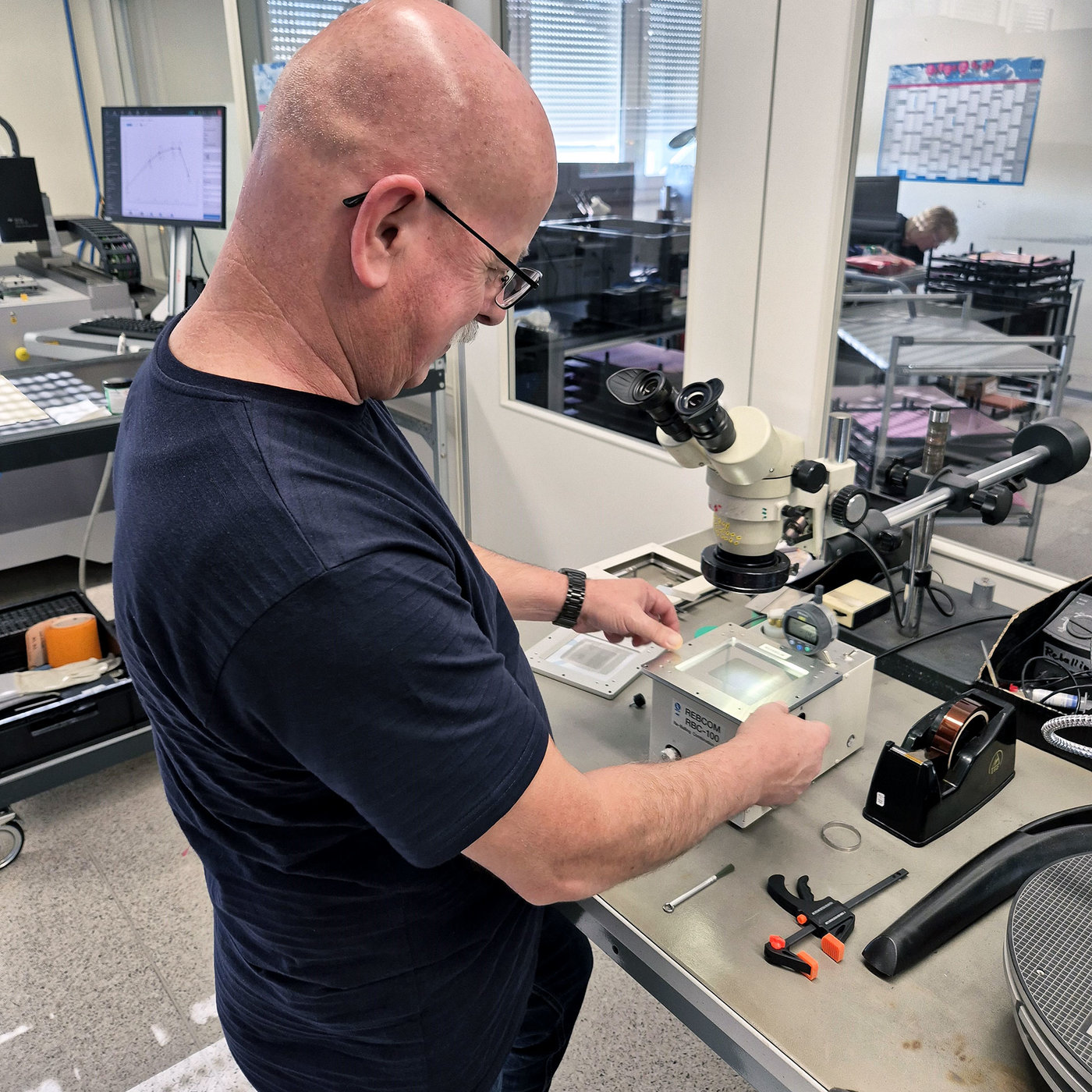
Lawo solutions are developed and manufactured 100% in-house according to the highest quality standards. After all, what needs to run absolutely reliably in the OB van, in the studio, or at the event venue must first be produced just as reliably in the manufacturing process. The quality of Lawo solutions is based on high-quality production resources, meticulous workmanship, and flawlessness – backed by tiered quality checks throughout development and manufacturing. The result is robust, durable systems whose service life can be further extended through professional refurbishment. “We employ specially trained teams that can repair customer circuit boards or, desolder, reball, re-assemble, and solder highly complex components. This saves resources in the long term and minimizes costs,” says Andreas Krug.
Expansion into High-End Rework
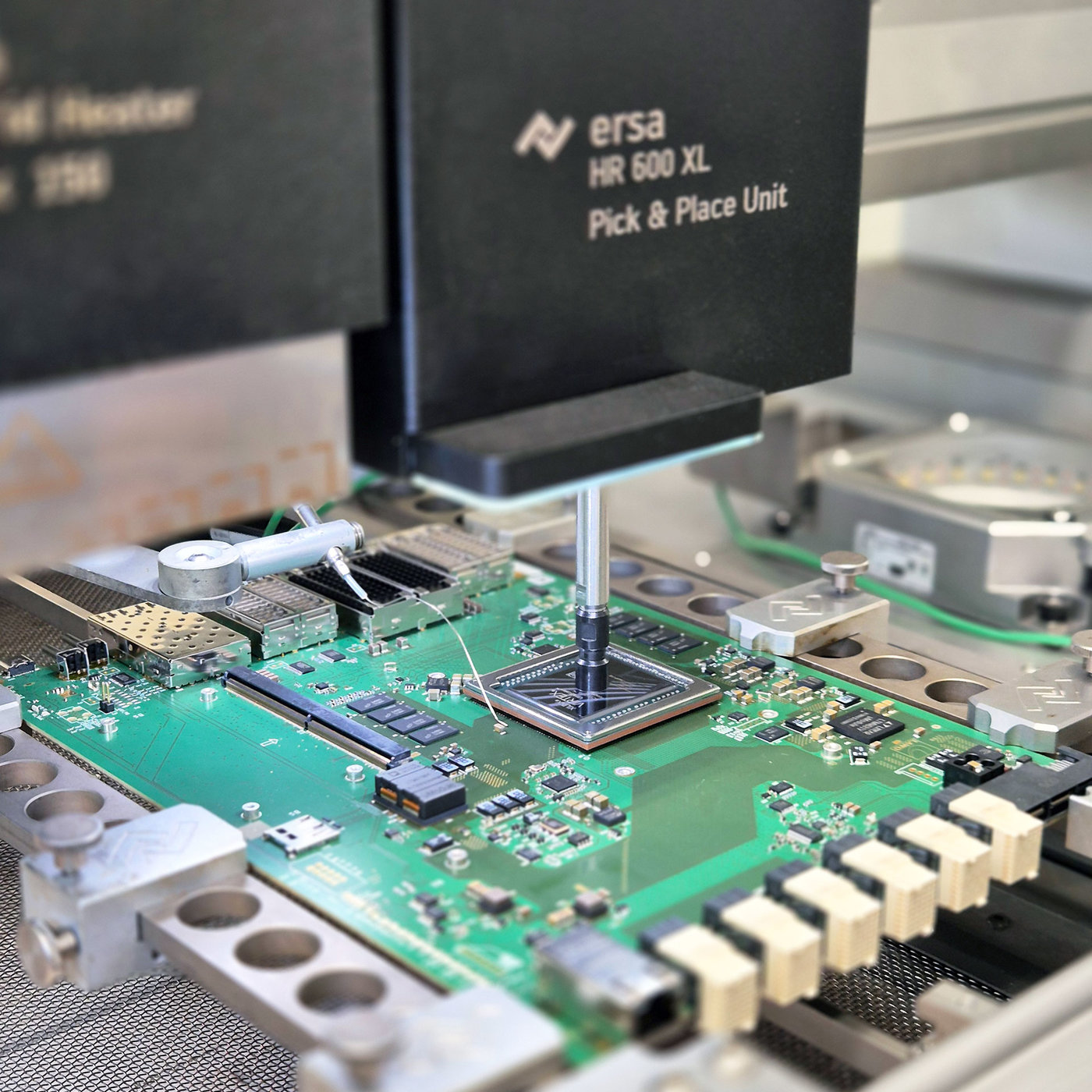
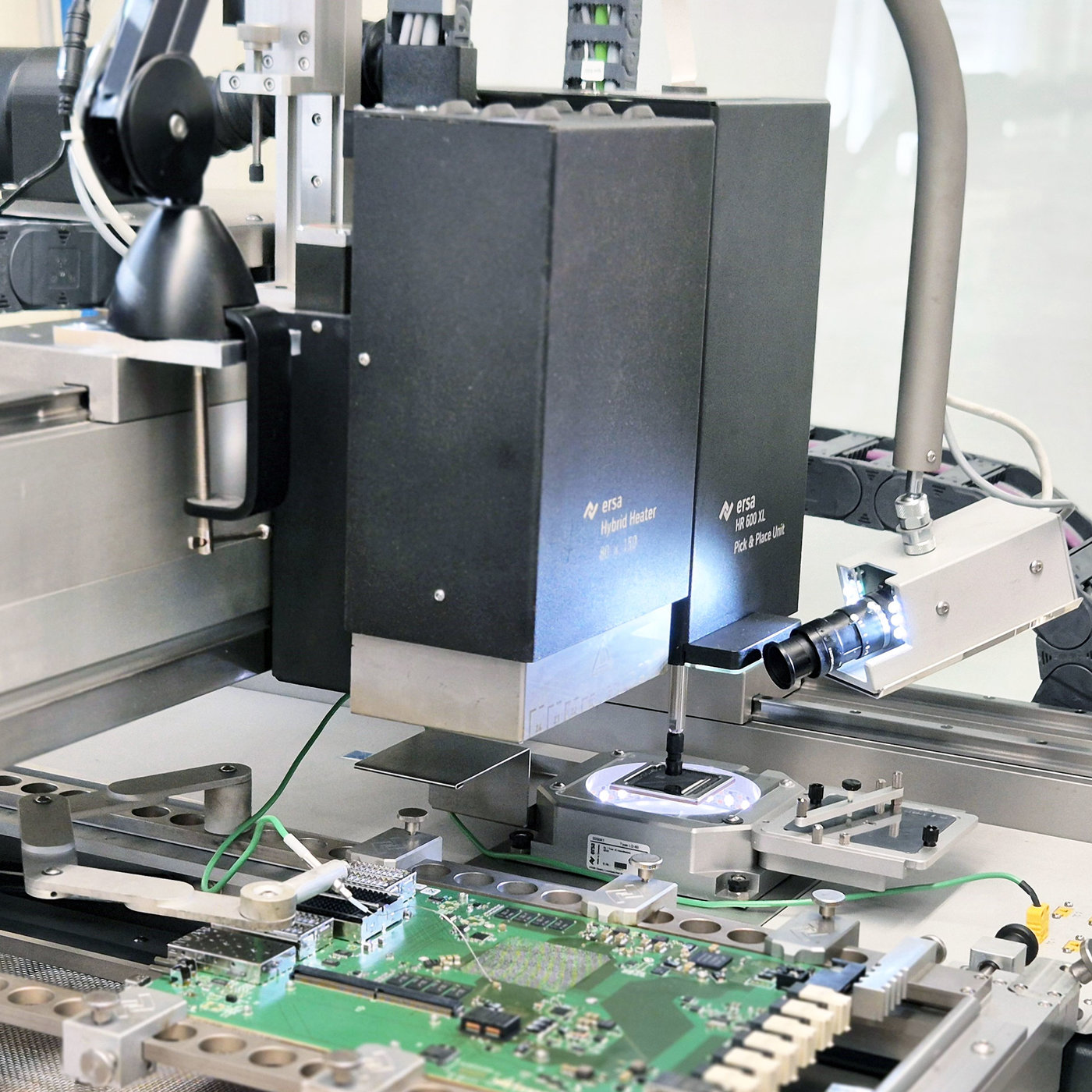
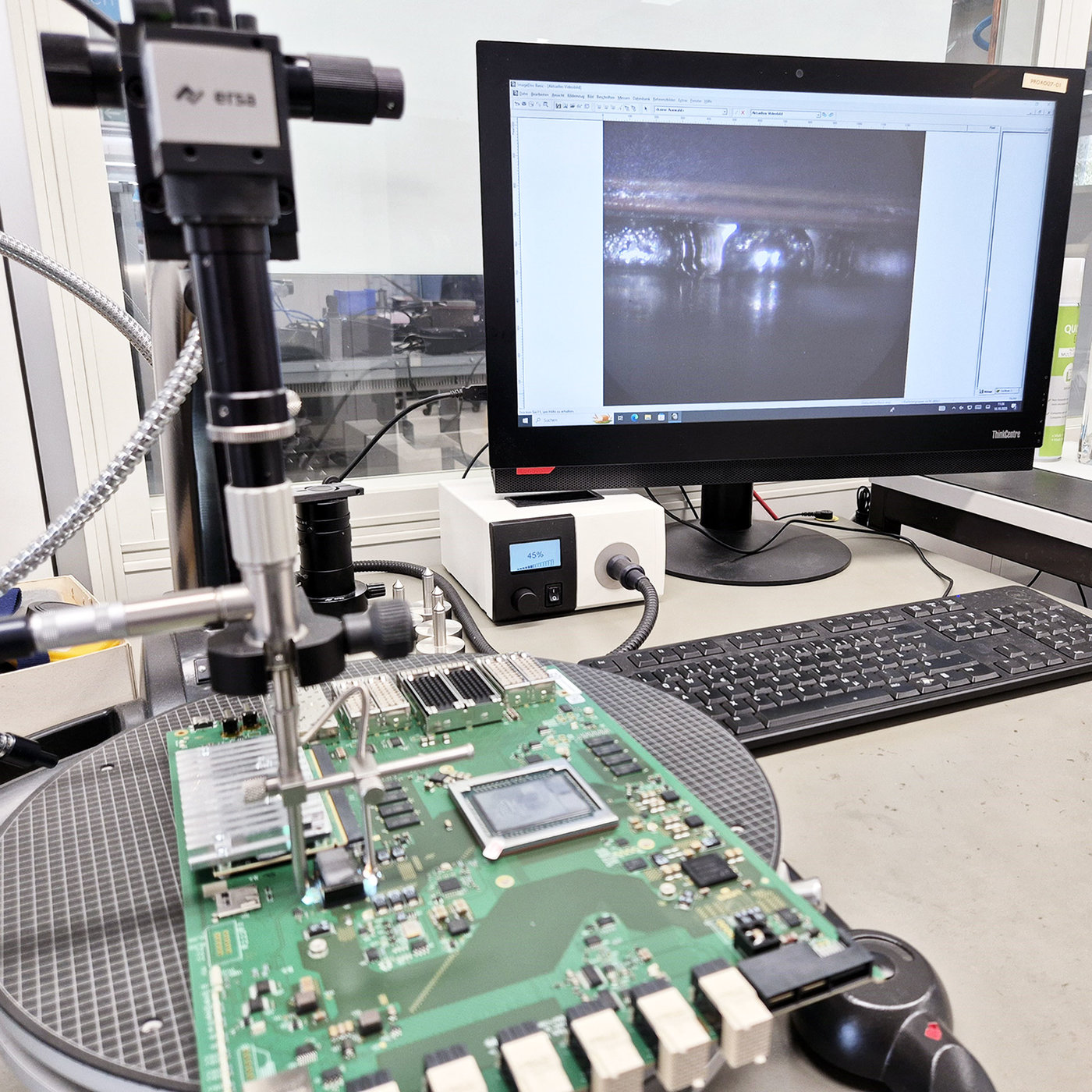
A look back at recent years shows that Lawo relies not only on optimized processes but also on appropriate technologies when it comes to quality: In 2016, the company opted for an Ersa system for the first time and acquired an ERSASCOPE BGA inspection system to visually inspect hidden solder joints. The next step followed in 2020: With the purchase of the high-end rework system HR 600 XL, Lawo specifically expanded its rework capabilities – with the goal of being able to process its own high-quality PCBs reproducibly and without any loss of quality. In doing so, Lawo underscores a principle that is crucial in the top tier of the broadcast industry: Quality is not merely a concern during final inspection, but the result of stable processes, modern technologies, and solid in-house expertise.
Big Boards: Large, Complex, and Demanding to Rework
Technical development in electronics has been proceeding along two tracks for years: higher integration density and increasing computing and data rates – without complex assemblies necessarily becoming smaller. Especially where large amounts of data are processed, powerful platforms remain in demand. In manufacturing and rework, this means: Anyone who wants to reliably handle such assemblies needs processes and systems that remain reproducible even with high thermal mass, many layers, and large dimensions.
In practice, the term “big boards” is used when PCBs reach a width of approximately 380 mm or more and are constructed with multiple layers. Such assemblies can easily exceed six layers, with typical PCB thicknesses ranging from 3 to 10 mm. The challenge: heat distributes differently, process windows narrow, and the demands on control and repeatability increase – especially when replacing high-quality components or performing critical rework. For Lawo, rework is therefore not a “repair corner” that runs on the side, but a quality-relevant process step. It’s all about controlled heat input, safe component handling, and documentable processes – so that rework supports the quality level rather than jeopardizing it.
Practical test before making a decision at the Demo Center
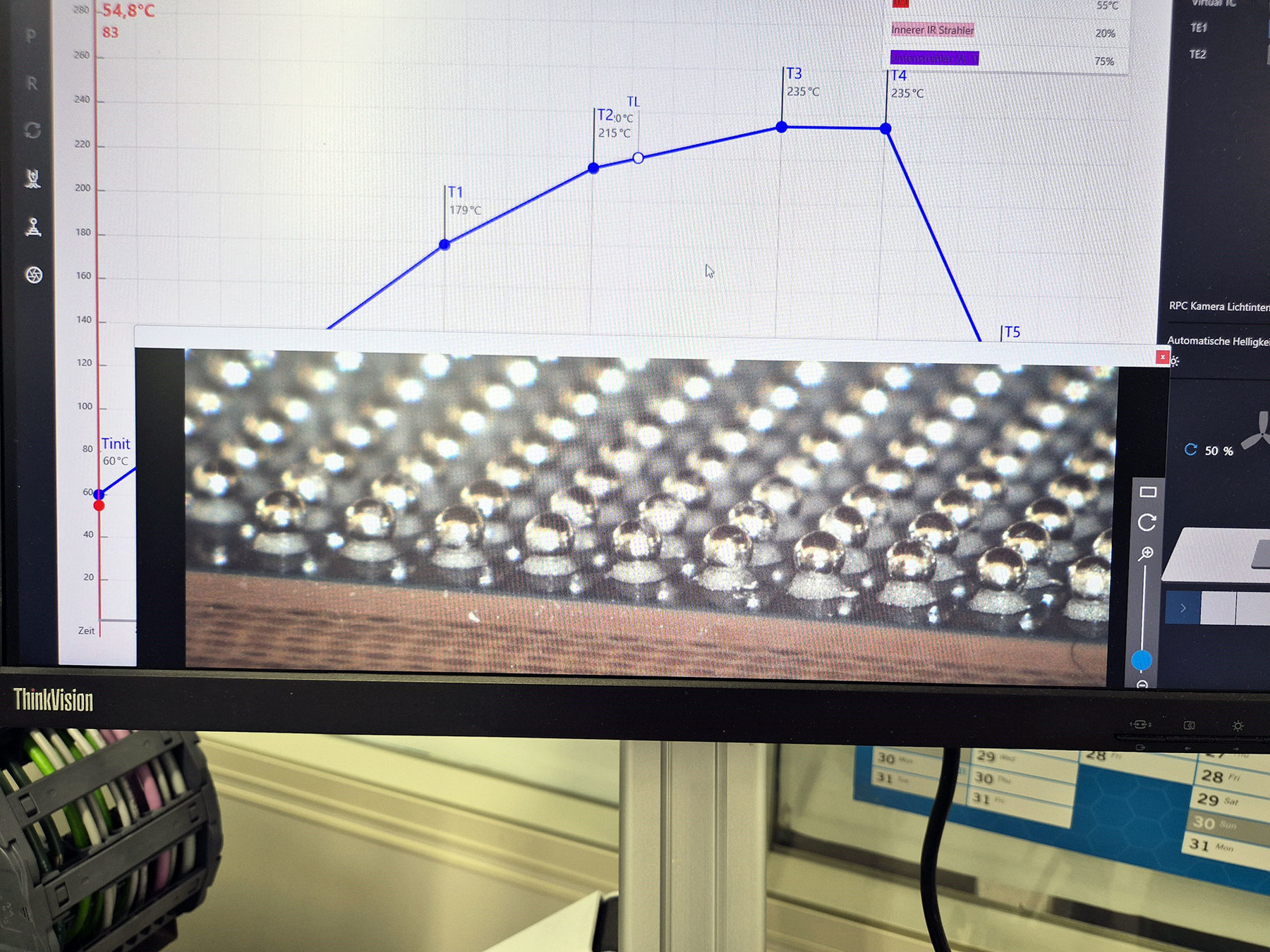
Before deciding on the HR 600 XL, Lawo engineers wanted to know exactly how the system would perform with their own real-world assemblies: What headroom does it offer for large, multi-layer PCBs? And how reproducible is a process across different scenarios? To find out, the team traveled to the Ersa Demo Center in Wertheim – bringing their own PCBs along. The test under real-world conditions aligned with Lawo´s commitment to validating decisions not theoretically, but through its own applications. Particular attention was paid to the reballing[JN1] [CF2] – a repair process in which the spherical solder joints on a BGA are renewed.
Result: The test run at the Demo Center was successful and met the high standards of the broadcast experts from Rastatt. “Our systems must function with absolute reliability in live operation for years on end – which is why it makes perfect sense for us to rely on processes in both production and rework that are reproducible and controllable. The practical test with our own PCBs was decisive in this regard,” says Harald Gillig, process engineer at Lawo.
HR 600 XL: Process reliability for demanding assemblies
With the HR 600 XL, Lawo expanded its machine park with a rework system that truly shines where standard solutions reach their limits: with large-format, thermally inert, and complex assemblies. For Lawo, this means above all: greater control over the process and thus increased reliability – both for critical rework and for the precise replacement of individual components. This makes rework a strategic component of in-house manufacturing: it enables high-quality assemblies to be processed efficiently and with quality assurance, shortens response times, and keeps expertise in-house – a clear advantage in an environment where technical excellence and time-to-performance matter. When a manufacturer produces in the top tier of the broadcast industry, rework processes must be just as precise and stable as the products themselves – the HR 600 XL provides the technological foundation for achieving reproducible results even with large boards.
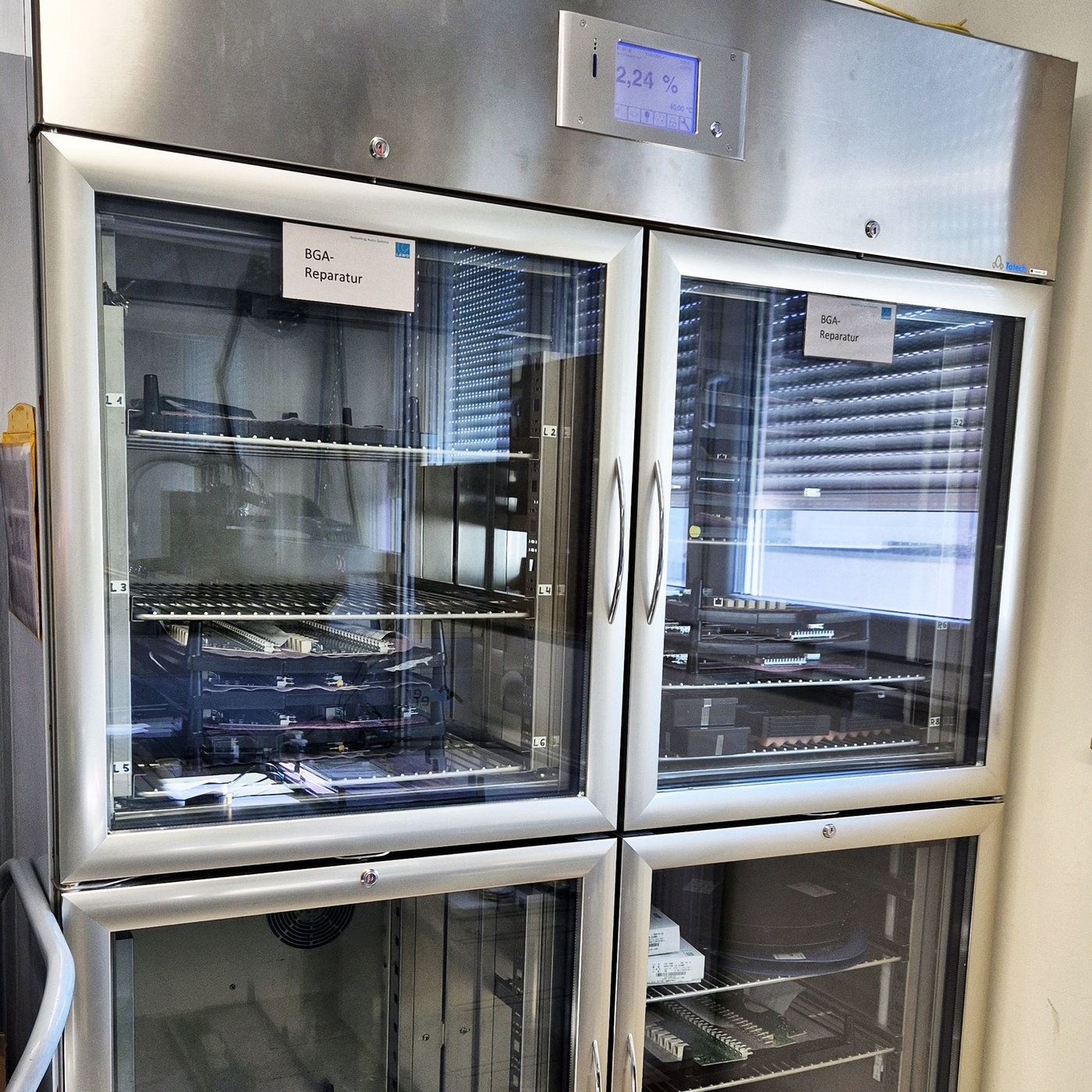
During reballing, the affected ball grid array (BGA) components are first dried to remove residual moisture. Then, using a stencil, flux and new solder balls are applied to the component. The components prepared in this way are subjected to a soldering profile in the rework system to remelt the new solder balls. The component is then positioned and soldered into the assembly.