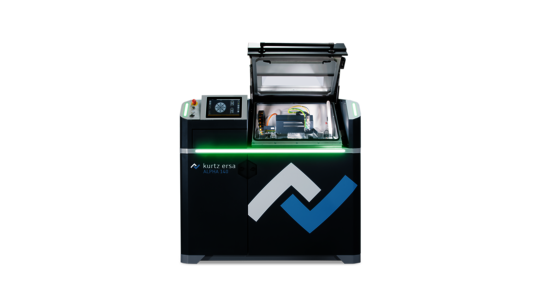
Controllable. Repeatable. Scalable. Kurtz Ersa Flying Ray® S
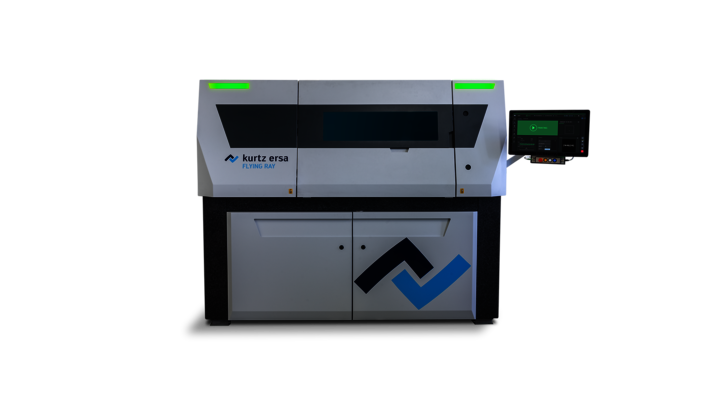
Modular and scalable. The Flying Ray® S combines the established PBF-LB/M process with a new machine architecture for industrial metal production. Laser beam delivery, software and process control are designed to work together as an integrated system.
Highlights Flying Ray® SMetal Additive Manufacturing
We have developed our multi-head printer in a modular design. This means that it can be customized according to your ideas and component requirements.
At a glance:
- Build Volume: 250 x 250 x 350 mm
- Available Material: 316L stainless steel
- Planned Materials: Inconel IN 718, Titanium TI6Al4V
- Laser Power: 400 per Pivot, one or two arms available
Advantages of Pivot Arm TechnologyPBF-LB/M Process
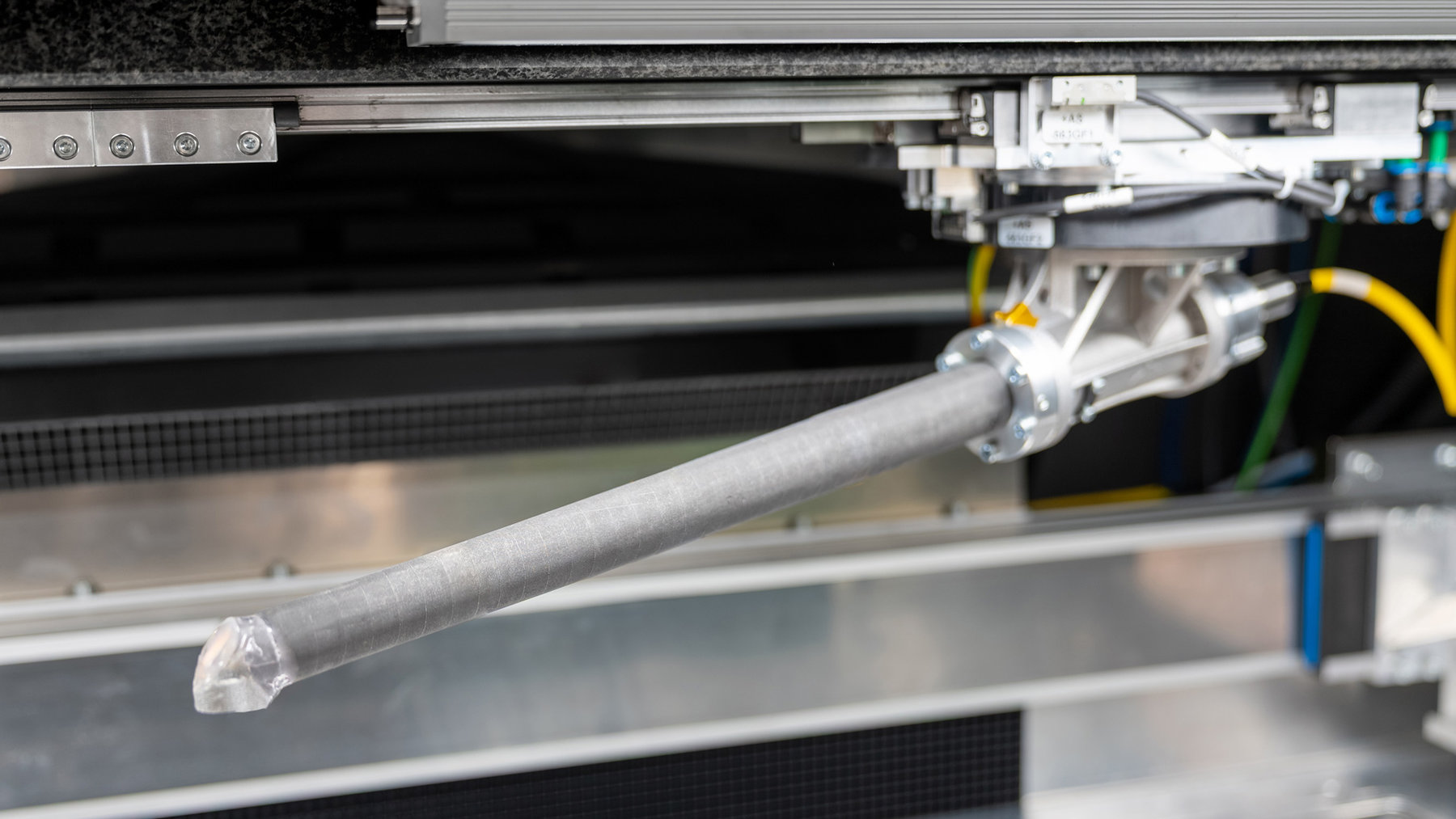
With the Flying Ray® S, Kurtz Ersa is relying on a unique PBF-LB/M technology: the pivot arm guides the laser across the entire build area, thereby laying the foundations for a controllable, repeatable and scalable process. The result:
- Consistent properties throughout the build volume
- Consistent quality of components regardless of their positioning
- Process control and reproducibility
- Open machine architecture
Controllable. Repeatable. ScalableFlying Ray® S
Highly functional due to vertically incident Laser Beams
In regulated and safety-critical applications, every component must be produced reliably. A good result alone is not enough. Quality must be reproducible – regardless of where on the circuit board the component is manufactured.
That is precisely why we at Kurtz Ersa have developed the Flying Ray® S. Its innovative technology guides the laser across the powder bed in such a way that the beam always strikes at the same angle. This ensures consistent conditions across the entire build area – from the centre to the edge.
Build-job Preparation, Process Monitoring and Reporting
Fuse-IQ: exposure planning for Flying Ray®
Fuse-IQ is the core of build-job preparation. Intelligent algorithms are used to create the exposure plan. Preparation considers not only part geometry, but also the physical behaviour of the material being processed and the relevant machine components. The precise sequence of the entire build process is therefore defined before the machine starts.
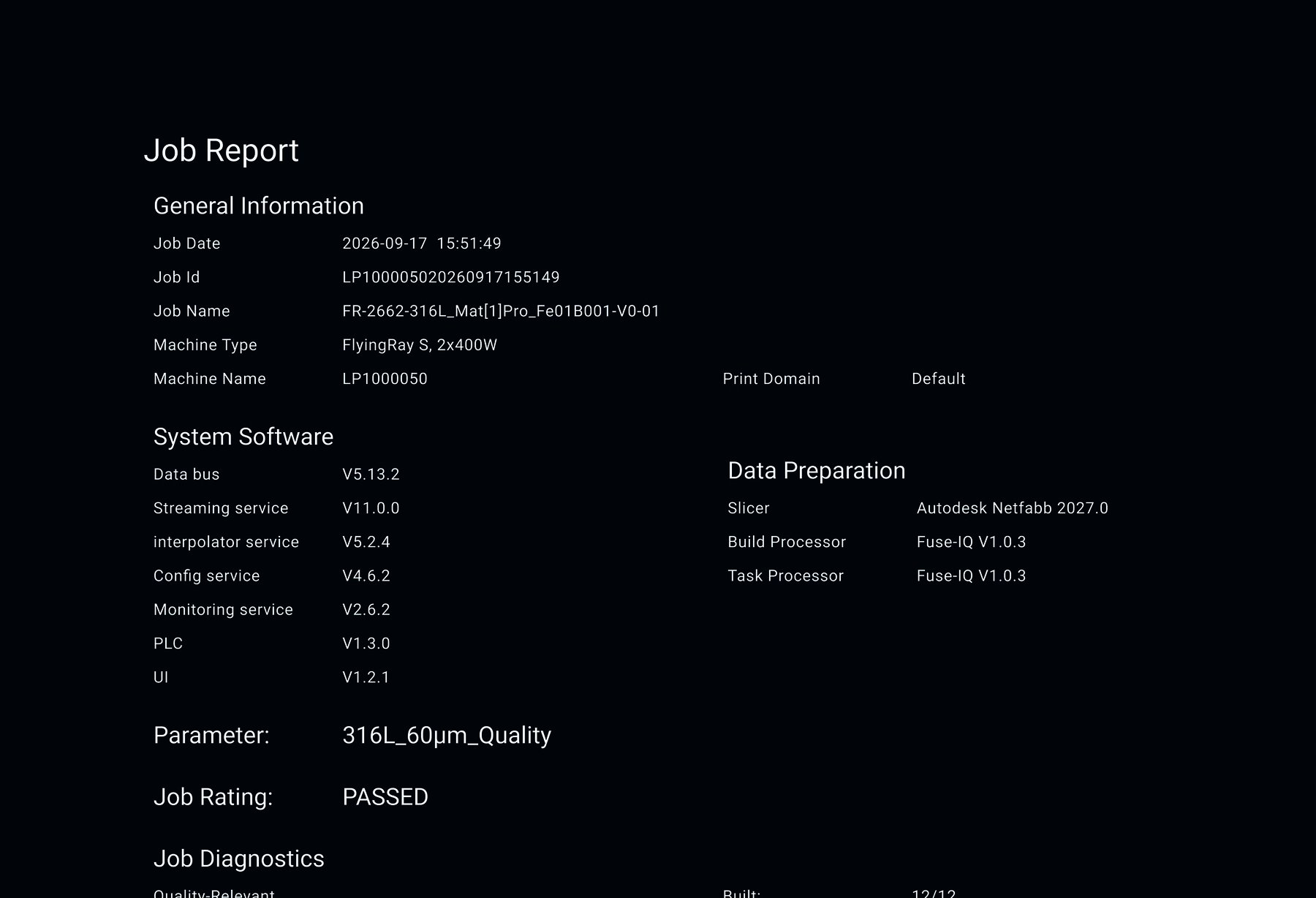
The job report documents information about the build job, the machine, the software versions and the parameter set used. The documented manufacturing conditions can be traced later.
The Exposure follows the Plan
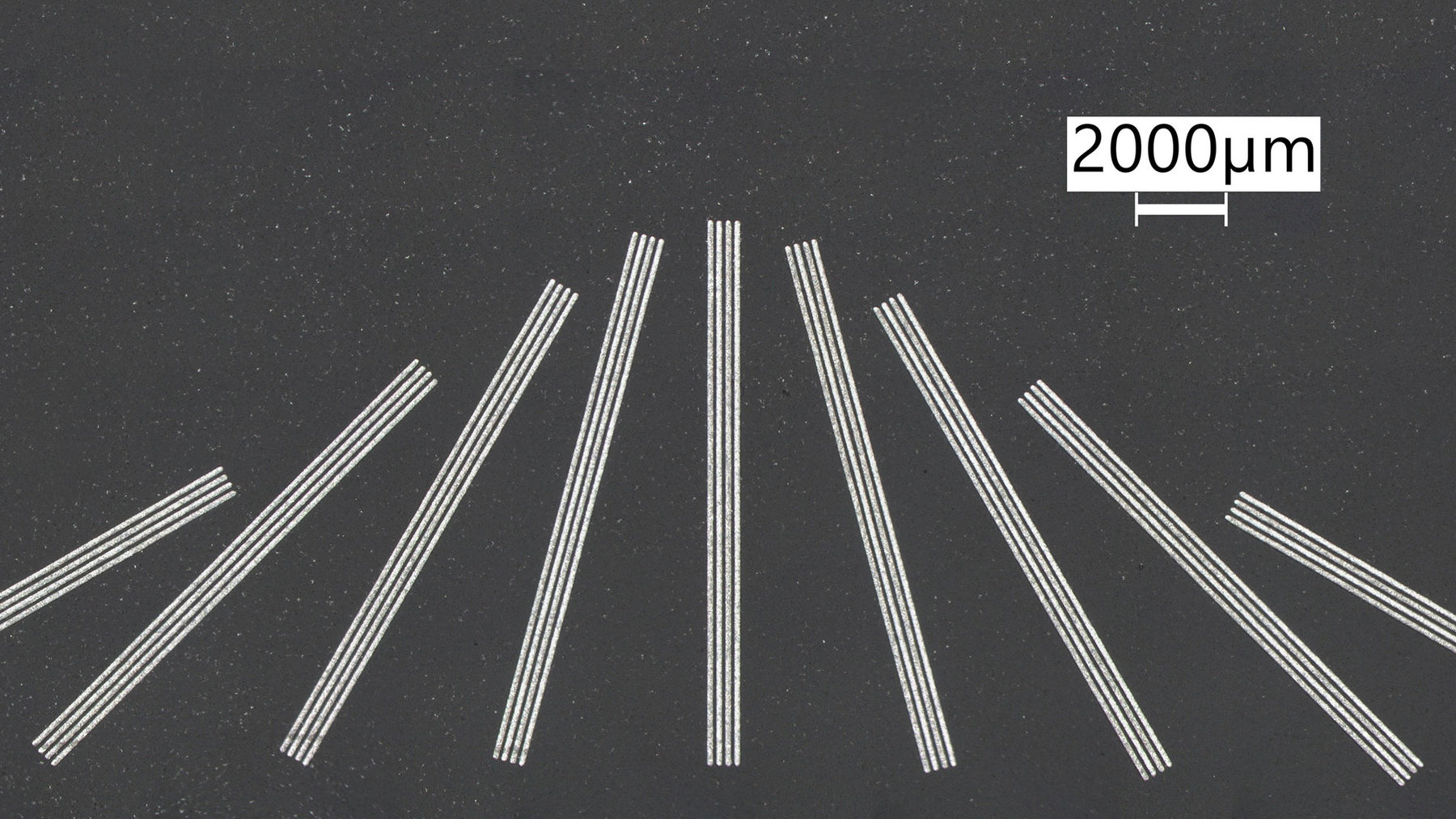
For the powder to melt uniformly, the position and spacing of the exposure lines must be correct. In a stress test, Flying Ray® S achieves a positioning accuracy of ±10 μm, even at high scan speeds and during acceleration and deceleration. Line patterns in different orientations and dynamic motion sequences were tested.
The rigid Pivot Arm design, combined with high-performance drives, enables an optimised distribution of moving mass. The control system coordinates the motors involved and synchronises laser switching with the motion. This ensures that every exposure starts and ends at the intended point.
High Density and Low Variation
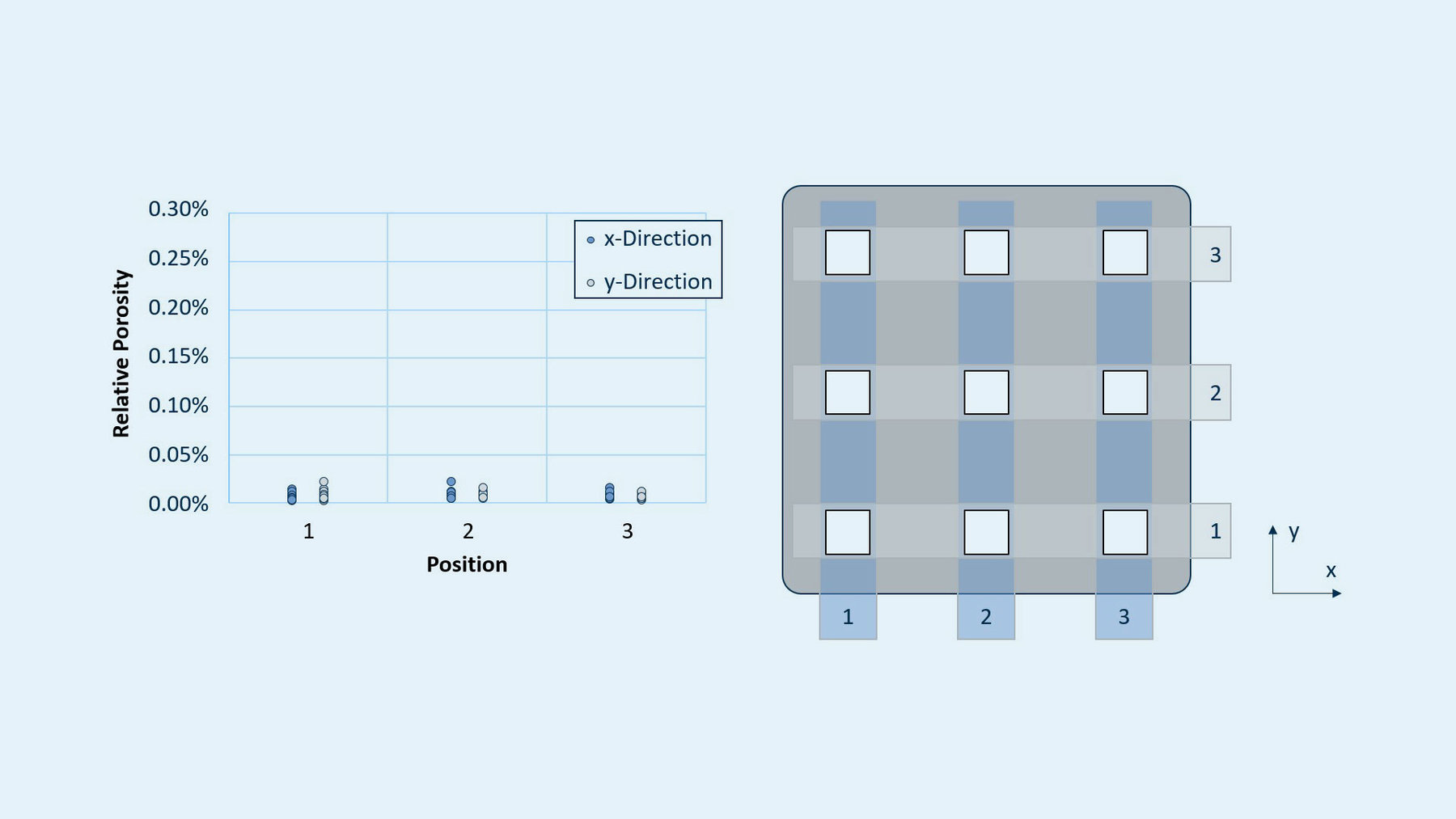
For predictable manufacturing, parts must achieve comparable properties at different positions on the build plate. A recent test shows positive results in the density analyses: light-microscope images of polished cross-sections show only minor differences between the positions examined in the x and y directions. All measurements in this test are above 99.97 % in relative density. This low variation is an important prerequisite for qualifying applications and repeating build jobs with consistent quality.
Technical SpecificationsAdditive Manufacturing
General
Process: PBF-LB/M
Usable build volume: 250 x 250 x 350 mm³
Layer thickness range: 20 – 90 μm
Inert gas: N2 / Ar (6 bar)
Inert gas consumption: Purging ~300 l/min, Process ~50 l/min
Compressed air: 6 bar, Purging: ~300 l/min
Ambient temperature: 20 – 35 °C
Materials
316L stainless steel
In development: Inconel IN 718 and Ti6Al4V titanium alloy
Further materials on request.
Laser and Optic
Laser: Fibre laser, configurable as – 1x or 2x 400 W
Wavelength: 1,070 nm
Focused spot diameter: ca. 80 μm, fix
Max. ScanSpeed: 1,500 mm/s
Electrical Specifications
Power supply: 230/400 V AC - 3/N/PE 63A
IP rating (electrical cabinet): IP55
IP rating (machine components): IP65