How Ersa GmbH & Co. KG is expanding the boundaries of a mechanical engineering company with a new training brand
At Productronica, the world´s leading trade fair in Munich, Ersa GmbH & Co. KG presented not only numerous new machines but also its new training brand, “EDUCATION by kurtz ersa.” We spoke with Rainer Krauss, Head of Sales Ersa GmbH & Co. KG, about what lies behind this initiative, the significance of training for the company, and how customers will benefit from it.
Mr. Krauss, it´s not every day you see a medium-sized machine manufacturer with its own training brand. What can we expect from it?
“EDUCATION by kurtz ersa” is our approach to consolidating the now very numerous activities in the areas of training, continuing education, and knowledge transfer in general. But a separate brand wouldn´t have been necessary for that alone. Rather, we also want to position ourselves as a provider in this field. Of course, the market knows us as a machine manufacturer, but our role as a knowledge provider is becoming increasingly important. In recent years, we have already welcomed several thousand training participants. The topic of training now holds a status comparable to that of a product category. We are reflecting this with our own training brand.
But you´ve been offering training for a long time. What has changed now?
That´s true. Training is practically part of our DNA. But demand is constantly growing and, above all, becoming increasingly international; Europe is pushing hard, and the rest of the world is also demanding more knowledge.
Without training, nothing will work in the future. Products are becoming increasingly complex, error rates are expected to continue falling, and the workload on staff is rising at the same time. Many experts are retiring, and those coming up through the ranks no longer have the time to learn the ropes the way they did 20 or 30 years ago. It is not uncommon today for a single person to be responsible for an entire production line or several lines. Staff turnover has always played a major role in many countries, but it has also increased significantly in Central Europe since the pandemic. So there is a need for well-trained staff, but they change frequently. It´s a vicious cycle.
And your response to this is the training brand?
Indirectly. We´re currently massively expanding our training offerings, both in traditional in-person training and in e-learning and hybrid learning concepts. So it felt right to give this a new, standalone framework. If you add it all up, we´d probably already qualify as an education provider.
Give us a rough estimate. How many people are trained each year?
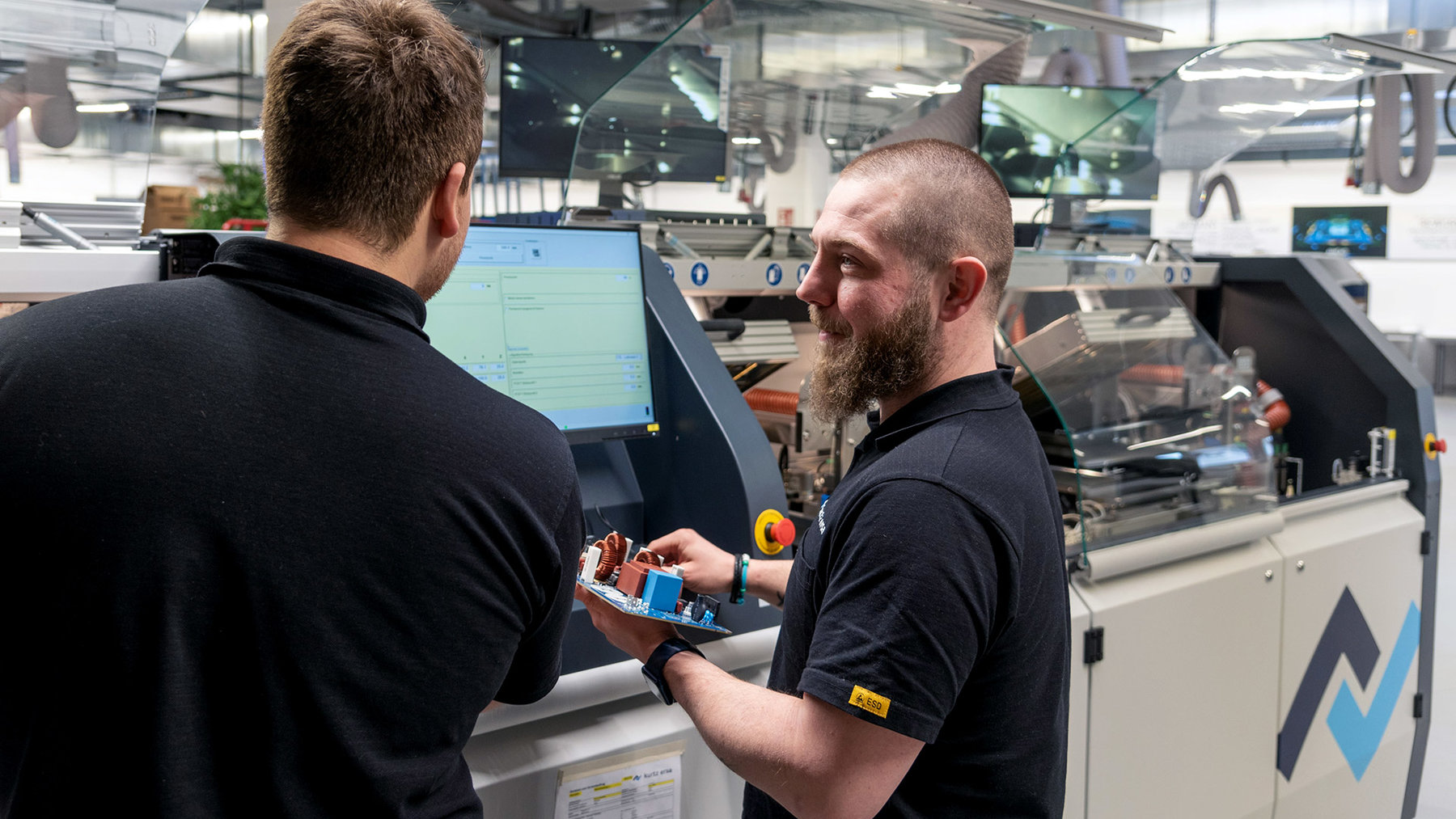
We currently offer about 160 individual training courses per year, with over 1,000 participants. Of course, this varies widely. In terms of numbers, many of the courses are the traditional operator or maintenance training sessions you´d expect from a machine manufacturer. These are usually small groups, but the training is intensive and in-depth. The same applies to our courses on hand soldering and repair soldering, which we offer as part of the AVLE program. For our know-how seminars in the machinery sector, which are also very demanding, groups of up to 20 people are possible, and these are regularly full. And then there are occasional events like the symposium “Soldering in Electronics Production,” which last year just barely reached 100 participants. So, we cover it all.
Those are impressive numbers. Are there any hot spots? I mean, specific industries or regions that are growing particularly fast in this field?
Surprisingly, no. We´re seeing a broad-based trend instead. In the past, training was heavily driven by the DACH region. Simply because many people shy away from training that isn´t in their native language. But recently, we´ve seen a significant increase in interest from other European countries. The topic is also gaining momentum globally. In North America, the seminars have been running successfully for some time, and more and more training sessions are taking place in Asia as well.
India, for example, is a market with tremendous momentum. There, it is a challenge to train staff as quickly as production is growing. In terms of industries, virtually every sector is represented in our training programs. In high-reliability sectors such as automotive or aerospace, valid certifications are a particularly important factor, as they facilitate the verification of employees´ qualifications. Other industries are currently seeing a significant increase in production volumes. Many companies in these sectors are either dealing with new processes or new personnel and therefore require training accordingly.
You mentioned AVLE. What is that?
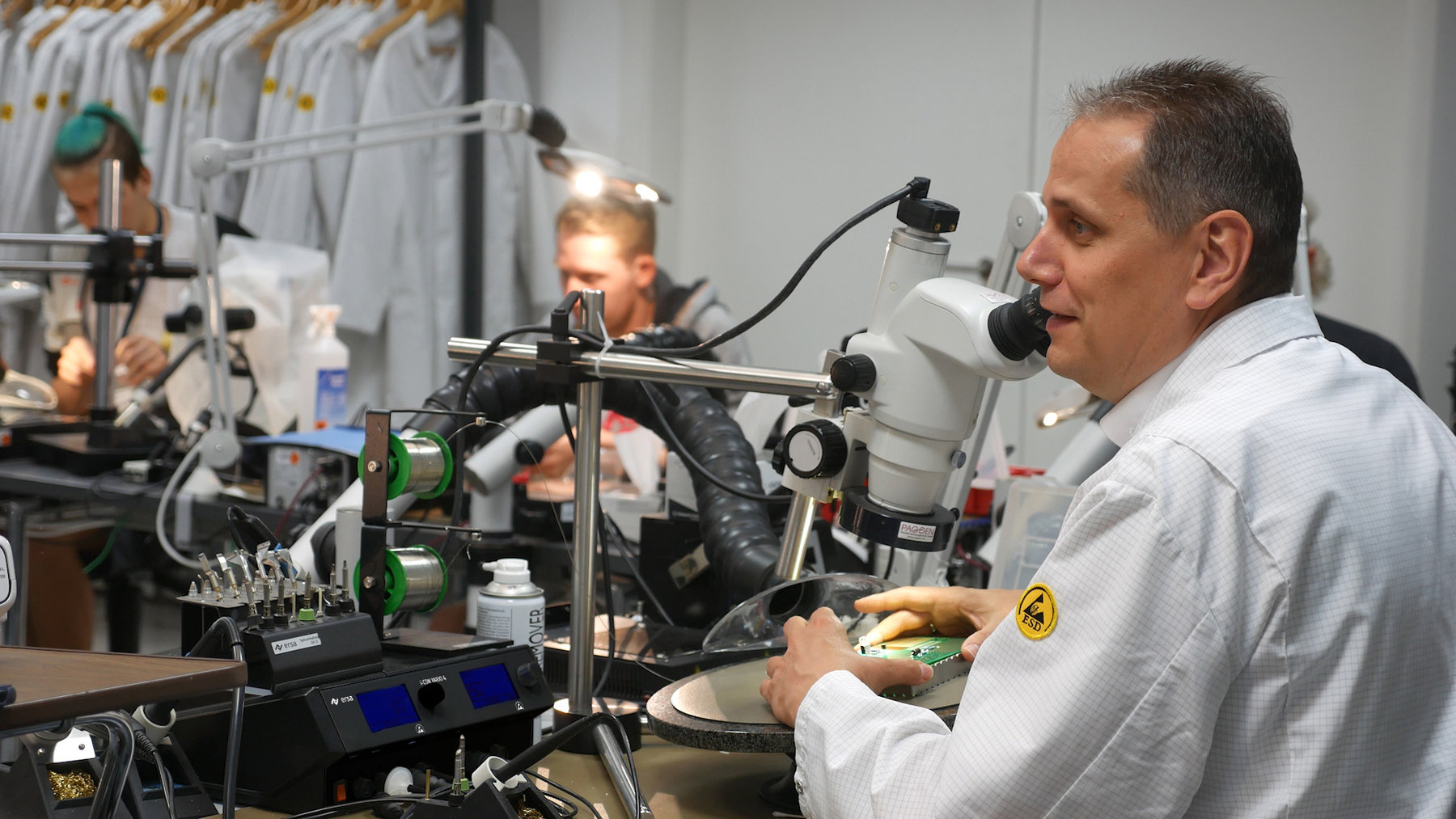
AVLE stands for “Ausbildungsverbund Löttechnik Elektronik” (Electronics Soldering Training Association). It´s an alliance of several companies that were fed up with the lack of available training for hand soldering. We´re a founding member and can say that the soldering certification introduced through this initiative is an absolute success story. The four AVLE modules are among our most popular training courses; something takes place almost every week within this framework. People come from electronics production, but also from repair cafés, government agencies, or as private individuals. The courses always include a theoretical and a practical component, so you really learn manual soldering from the ground up.
A soldering license implies an exam, right?
Exactly. Performance must be assessed; otherwise, the value of the training is quickly called into question. We place a high priority on this aspect – every certificate must be earned through an exam. This enhances its value and is part of the success story of our training programs. Exams have long been established for the AVLE and our know-how seminars. But they are also increasingly required for in-house seminars and customer-specific technology days. The exam is the foundation of a trustworthy certificate. Take the TÜV, for example, which automatically lends credibility to any document as a brand.
That´s an interesting point. So a trusted certificate is extremely important?
Absolutely. We´re already perceived as a very strong brand in this sector, and we´ll carry that trust over to “EDUCATION by kurtz ersa.” We´ve worked hard to earn that trust, and it´s certainly one of the reasons for the strong growth in our training programs.
Here´s an example: A few months ago, we hosted experienced specialists from one of our European offices at a know-how seminar. They already possess a great deal of knowledge. But they told us that they see how much less discussion their colleagues need to have when they can present an appropriate certificate. Ultimately, this also makes their work easier. And that´s based on trust in our training programs.
Let’s talk about the rest of the offerings. What do the know-how seminars cover?
That´s the umbrella term for our process training courses – perhaps the flagship of our training offerings. These courses really delve into the details and bring participants up to a specialist level. We offer know-how seminars on wave and selective soldering, stencil printing, and reflow soldering. These are one- or two-day courses, always combining theory and practice. We have dedicated trainers for these courses, all of whom are experts in their respective fields. The seminars are all manufacturer-neutral, so the knowledge gained can be applied to any compatible system. This is an important aspect because the target audience for the training is growing. We have many participants who do not own corresponding Ersa systems. And yet they confirm to us that the knowledge is of enormous practical help to them.
Are the seminars only available in German?
No, we also offer English-language courses directly in Wertheim every year, which are primarily booked by participants from other European countries. Interest is growing noticeably year after year. That´s why we´ll also be offering a know-how seminar on hand soldering and rework for our international customers in the future. Given the developments in this field, this is almost overdue. Rework is currently experiencing such momentum, and assemblies and components are becoming increasingly expensive, so it really matters that you know what you´re doing. In addition, we regularly offer seminars in various countries. Depending on the country, we organize these ourselves or with our local partners.
But those are all in-person training sessions. You also mentioned online concepts?
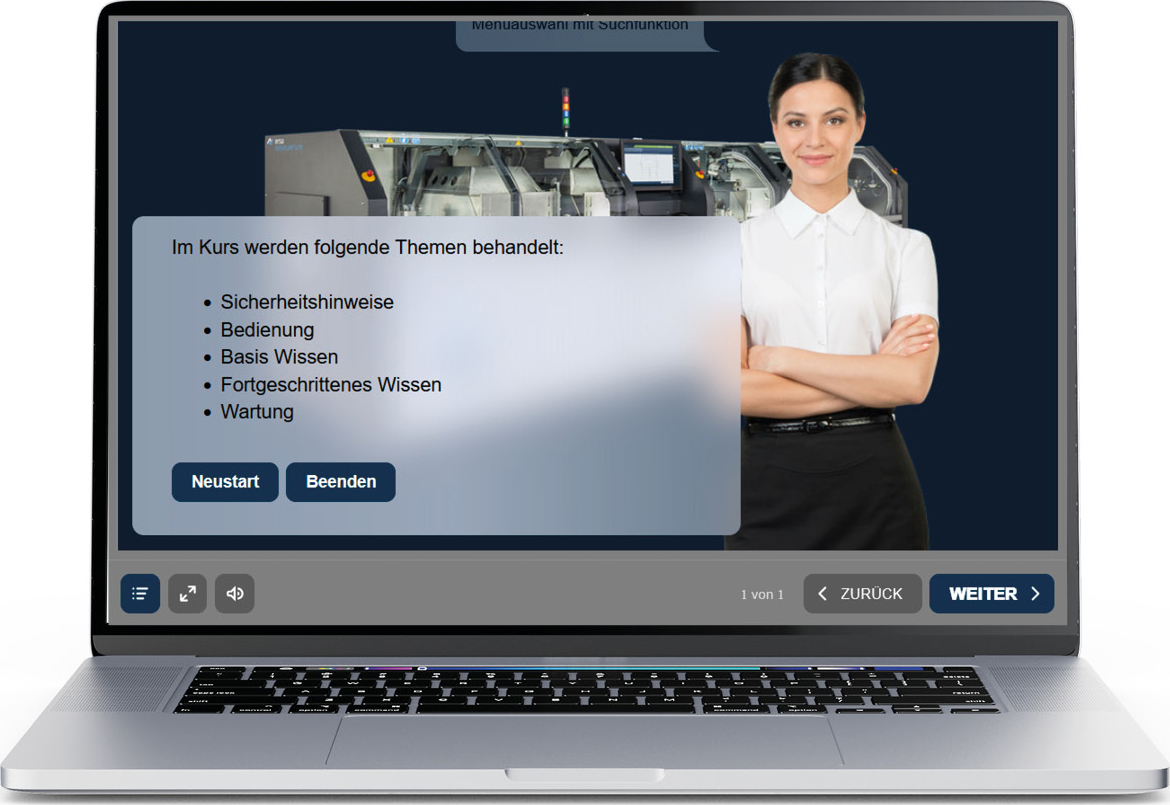
It is the digital offerings that are developing the fastest. We launched our e-learning platform in 2024, as the first provider in the soldering technology sector. Initially, the focus was on service topics, but in recent months we´ve also added process courses on wave/selective soldering and reflow soldering. We´ve since significantly expanded the service section of our e-learning platform with new machines and a series of troubleshooting guides, including videos. This has been very well received. The content is available in both German and English.
Does e-learning then compete with your existing offerings? And what exactly is hybrid learning?
From our perspective, the digital option isn´t competition, but rather a complement. There are things that can never be taught online – situations where the customer needs to see and touch something, to develop a sense of it. We´re also convinced that a live instructor in the room is perceived differently than an avatar or even a webinar. That´s why we adapt our presentation style accordingly in these formats. However, e-learning can vastly expand target audiences. It helps us distribute knowledge much more widely. The barrier to entry is simply lower due to lower costs, no travel, and full flexibility in scheduling.
We see both areas growing. E-learning is rapidly increasing its user numbers, while at the same time we also saw a sharp rise in demand for in-house seminars at the client´s location last year. Hybrid learning actually combines the best of both worlds. Part of the content is delivered online, and part is delivered in a face-to-face training session, which can perhaps be shorter as a result. We´re already using this approach for the pre- and post-training phases of our know-how seminars and are getting very positive feedback. That´s why we plan to offer even more of these options in the future.
That´s quite a diverse range of offerings. The move toward establishing a training brand makes sense in that context.
That´s not even all. The service division is continuously expanding its training offerings for operator, programming, and maintenance training. So-called in-house seminars – that is, know-how seminars held on-site at the customer´s location – are becoming increasingly popular. In the style of the know-how seminars, we also offer customer-specific technology days. Here, a package is put together from our existing topic blocks, tailored specifically to a customer´s requirements. This can focus on reliability or PCB design or be adapted for specific target groups. And, of course, we are constantly developing new topics to address market trends and technological advancements.
I have one last question: How do you assess the developments in AI models? How do you think this will influence training?
That’s a very interesting question that we´ve already discussed internally. It revolves around the vision that AI will solve all problems directly, pushing employees´ knowledge into the background. Based on our current assessment, public AI models are still quite far from being a real help in the field of soldering. They likely lack the training data and the ability to form new connections; here, AI still lags far behind a human employee. But its importance will increase in the future, and we are working on AI on many fronts. Sooner or later, there will certainly be good AI solutions in the field of soldering. But until then, well-qualified personnel are still the best solution for success.
Mr. Krauss, thank you very much for the interesting conversation!