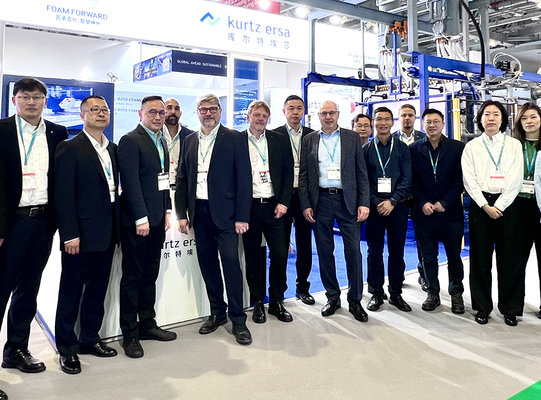
Our goal: Instead of reacting to each situation as it arises, we will in the future follow a clear sequence – step by step, reproducible, and with consistent quality. Behind this approach is our Protective Solutions division, which turns experience into standards. Or, as one user puts it: “In the past, every change was different. Today, we start the sequence, follow the steps – and the quality remains consistent.”
The pressure on production is mounting – and with it, complexity. When orders are reprioritized every hour, it´s not just the production rhythm that falters, but above all the stability of the processes. Unplanned setup times create gaps in the schedule; downtime costs output and frays nerves. Instead of simply accepting this dynamic, we work together to develop practical solutions: standardized, guided processes that make setup operations predictable, create transparency, and tangibly safeguard productivity. This transforms constant uncertainty into an orderly workflow – with processes that function reliably even under time pressure.
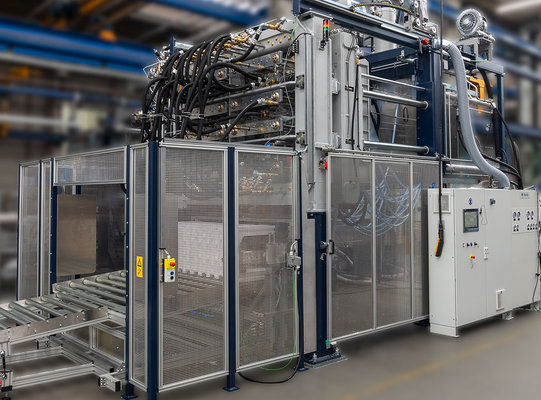
To ensure this reliability in day-to-day operations, we carry out the tool change as a clearly guided sequence – traceable, safe, and without detours. First, the fully prepared tool is placed on the tool-change cart. After opening the machine, it can be inserted either from the operator side or from the front. The cart is then aligned at the designated position and secured with the locking pin to ensure it remains centered.
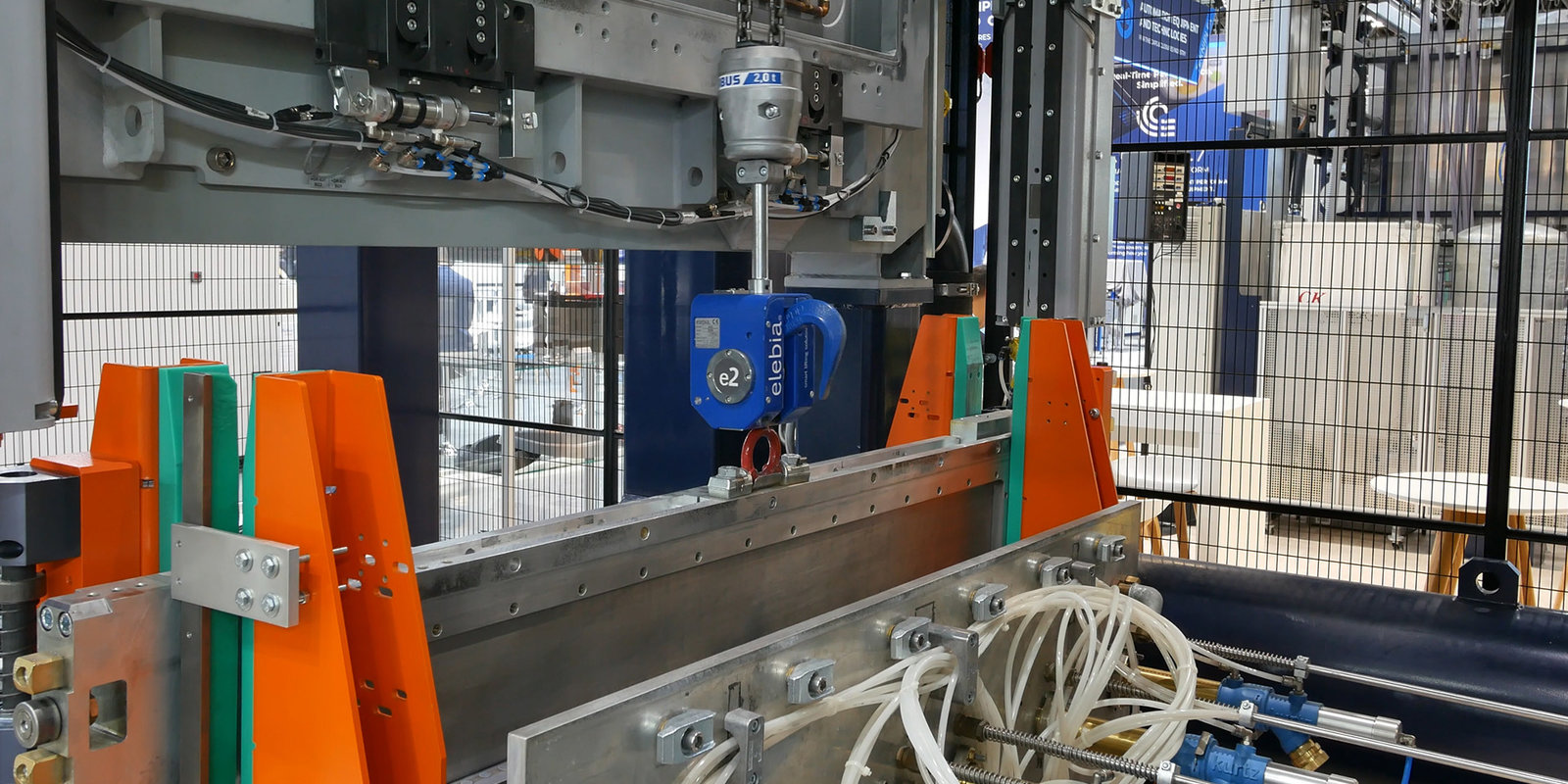
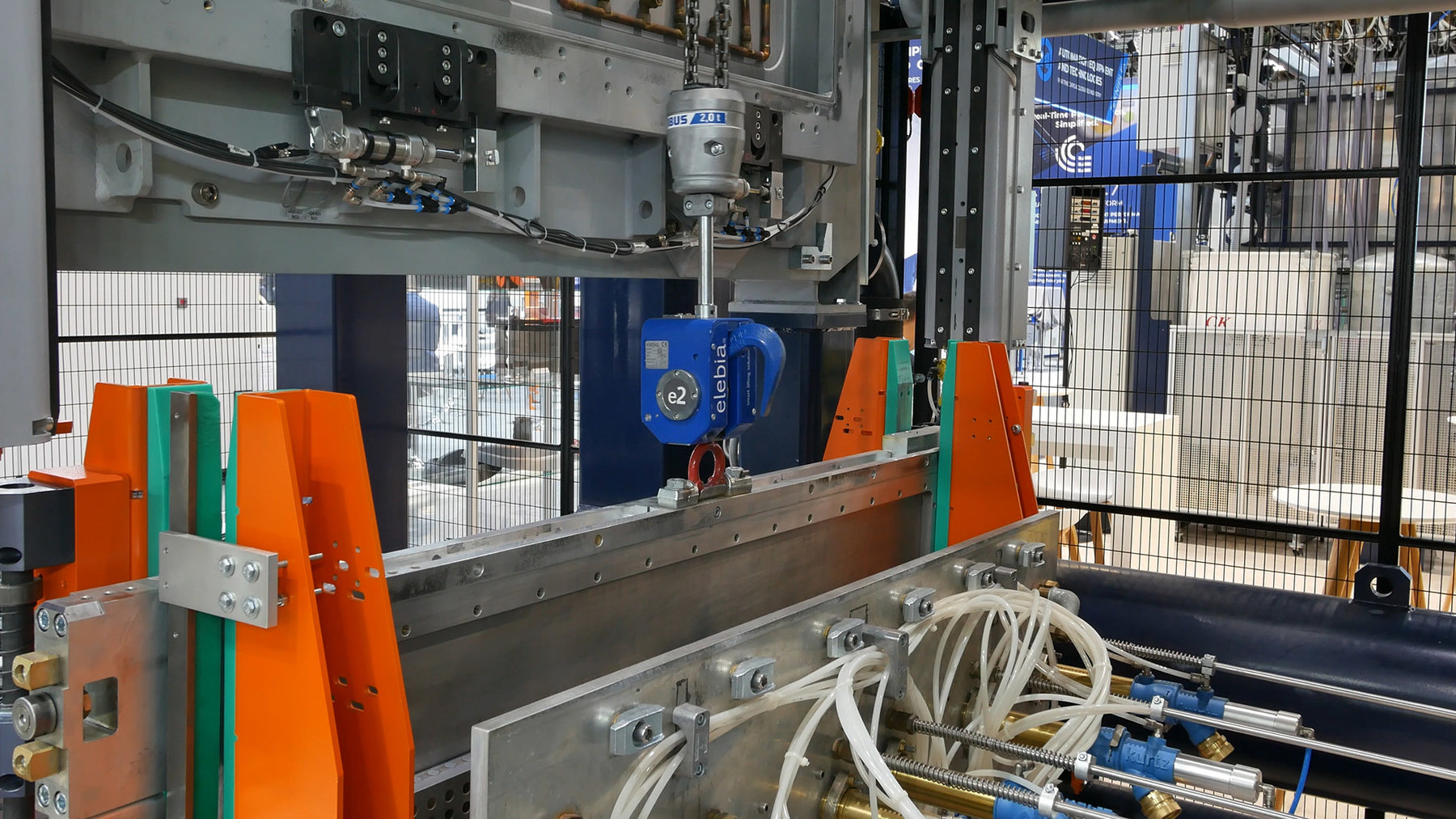
The crane then takes over: The hook automatically grips the tool and lifts it along the guide into the steam chamber. There, it is locked in place and securely fastened on the side of the fixed press frame MI using pneumatic locks. The change cart can now be removed, and the crane hook opens to release the tool.
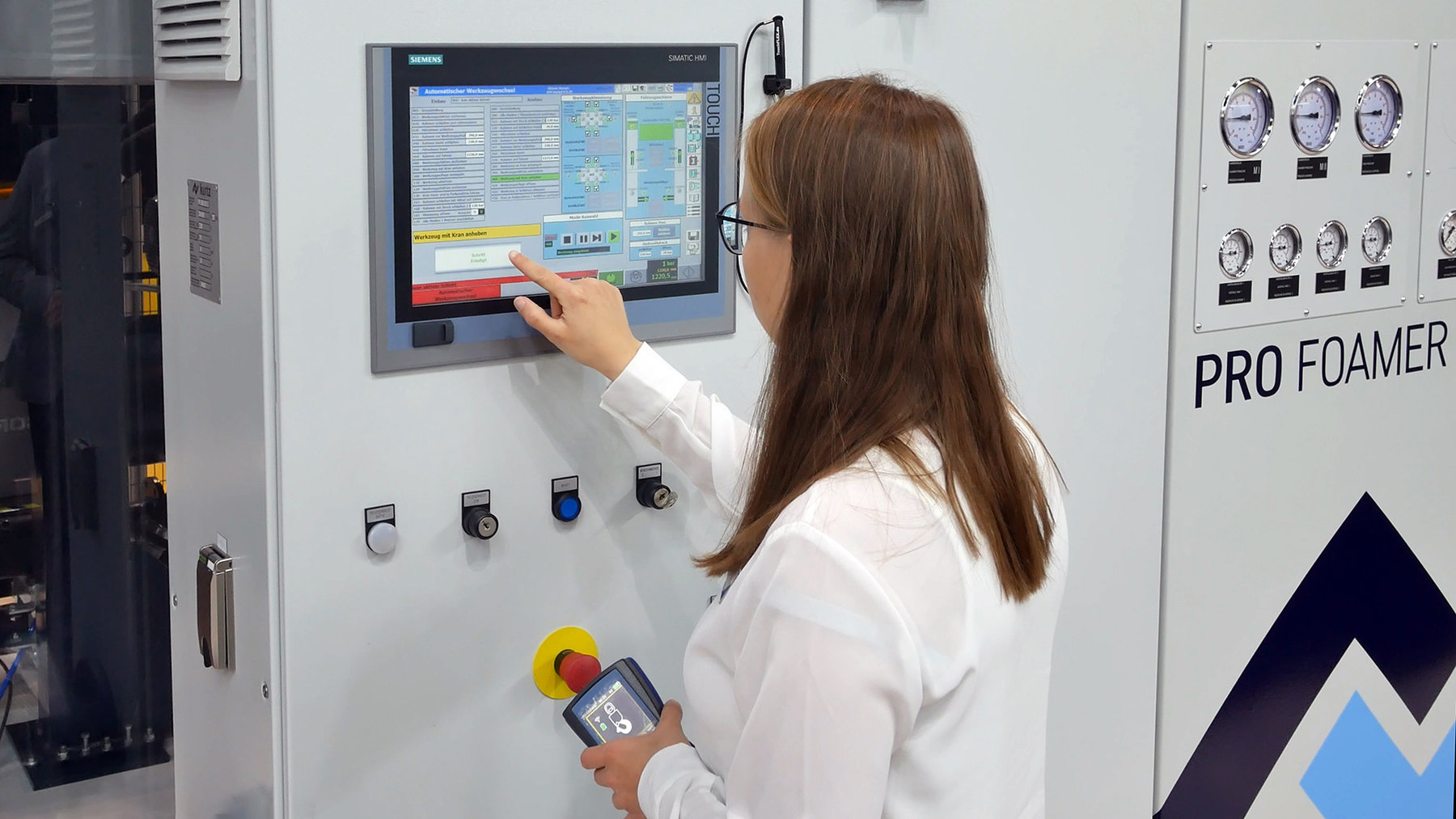
In the next step, the machine closes, and the tool is additionally locked on the side of the movable press frame MII. The locking mechanism of the mounting frames then opens. Finally, the clamping jaws of the filling plate are tightened, the media connections are established – in particular the connections for the filler and air distributor – and the tool change is complete.
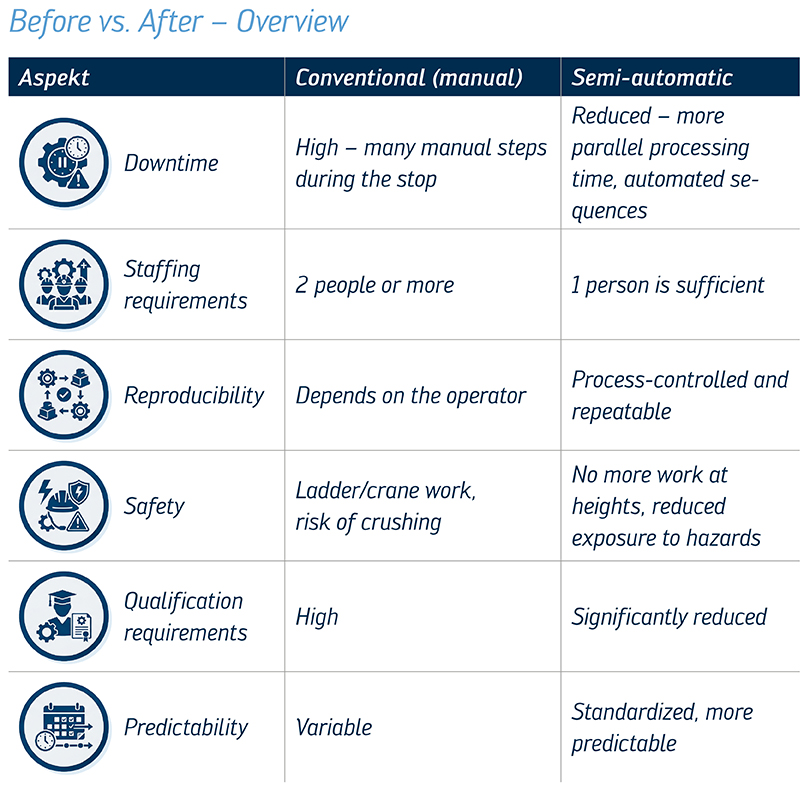
In conclusion, it can be said that semi-automatic tool change demonstrates its strengths wherever cycle time, safety, and reliability are key. It is particularly well-suited for manufacturers with frequent tool changes and a clear focus on OEE, for plants with limited availability of skilled workers, and for companies with strict EHS guidelines and audit requirements. Series manufacturers who prioritize predictability and repeatability thus lay the foundation for consistent quality – shift after shift.
→ Available for: PRO and POLY FOAMER models in sizes M and L with the Fast/Blocked System